Jointing Opposite Faces
George Vondriska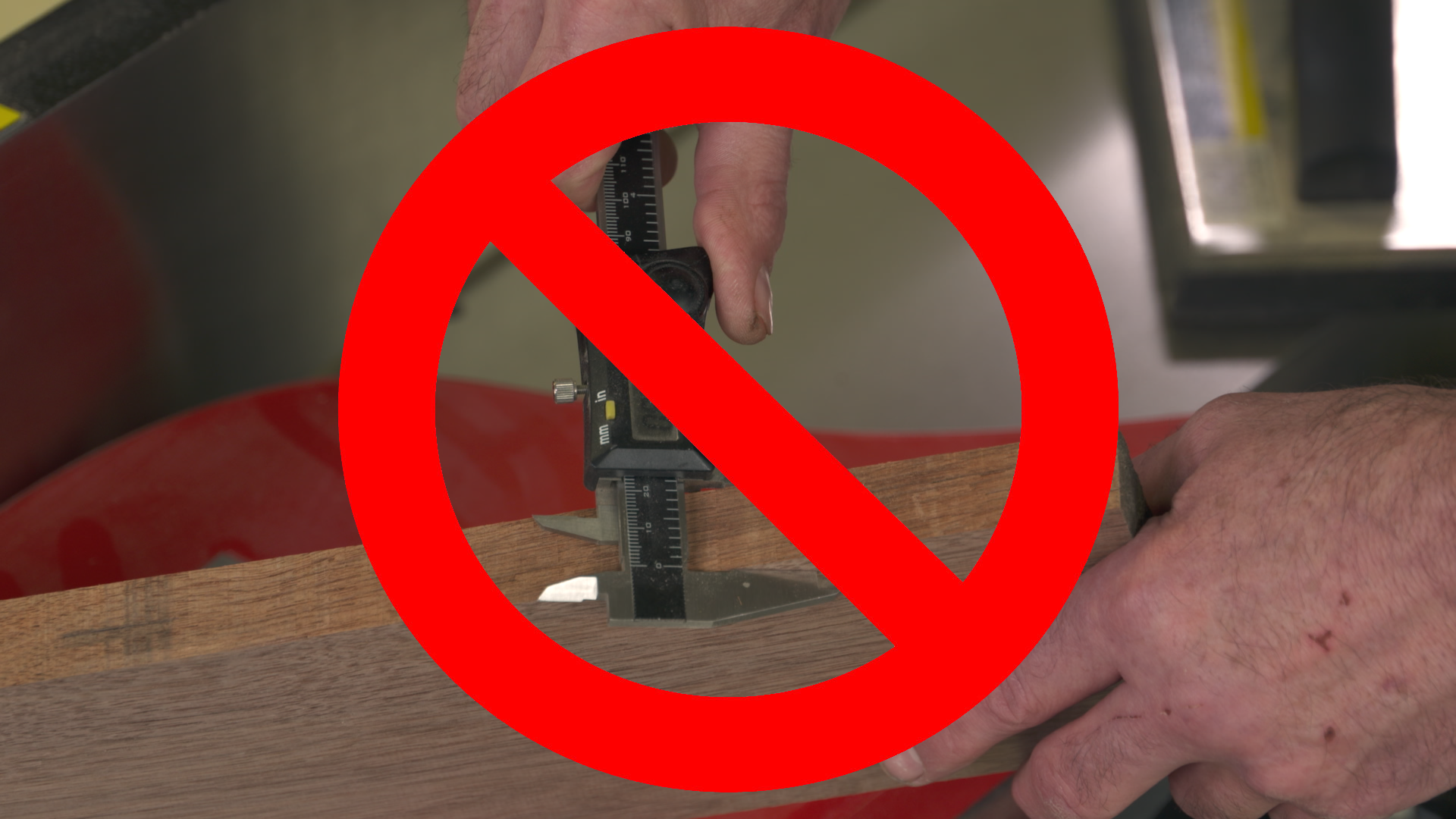
I get asked, all the time, about using a jointer to face joint opposing faces of a rough sawn lumber. Will this work? Can it be done? If not, why not? The answer: A jointer will do a great job of getting two opposing faces smooth and straight, but it WON’T guarantee that the two faces are parallel to each other. The problem is that, if the two faces aren’t parallel to start with (and from a sawmill, they won’t be) you can’t make them parallel on a jointer. This is a bad start to a woodworking project.
The right approach
This is a great application for a jointer and planer working together. Once you have one face of the board flat, take it to the planer and you’ll be guaranteed flat faces, parallel faces, and uniform thickness.
When SHOULD I use a jointer?
Although the jointer isn’t the right tool for face jointing opposing faces of rough sawn lumber, it’s great for lots of other jobs, and a must-have tool for getting your lumber true.
Jointer techniques
Jointers aren’t the toughest tools to master, but there are subtleties that will help your work come out better. Be sure you’re confident about how to use a jointer before diving in on your first project.